
Home Uncategorized
Category:

Uncategorized

Advertisement

The Australian housing market woes are set to continue, with the RBA’s top boss confirming they will not stop falling house prices.

In a grim update for property owners, RBA governor Michele Bullock used her time at the Committee for Economic Development of Australia (CEDA) fireside chat to explicitly rule out moving on rates as house prices slump.

“One point to make upfront here, we don’t target housing prices,” she said.

“We do observe closely what’s going on in the housing market because it is one area that monetary policy has an impact.

Ms Bullock said the way the central bank thinks about the housing market is the impact on wealth, which can stop spending in other areas of the economy.

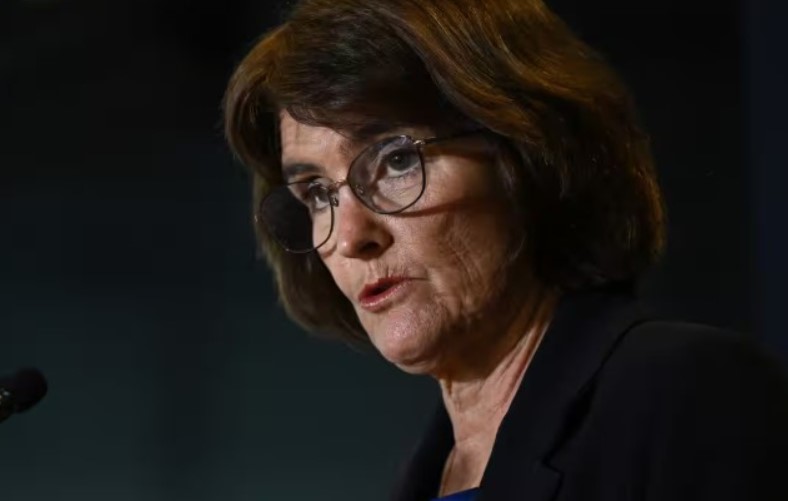
RBA governor Michele Bullock says house prices are not part of their remit. Picture: NewsWire / John Appleyard

RBA governor Michele Bullock says house prices are not part of their remit. Picture: NewsWire / John Appleyard

Her comments come ahead of a critical September interest rate meeting where the central bank is widely expected to lift interest rates again.

This would be the fourth interest rate hike in the cycle taking the cash rate from 3.60 to 4.60 per cent, which would be the highest level since the global financial crisis.

While taking part of the blame for the housing market shaving its fastest fall in four decades, Ms Bullock said the tax changes which were brought into effect in May also stopped investor activity.

“You can see very directly the impact of the tax changes because you can see housing approvals for investors have just dropped.,” she said.

“They’ve dropped for everyone, but they’ve really dropped a long way for investors.

“It has changed the dynamic for investors whether it’s worth them investing in housing or not.”

However, Ms Bullock said house prices had surged since the beginning of Covid and were now coming down from “a very high base”.

“At the moment, if you look at how it’s correcting relative to other corrections, and the downturn is sort of in the lower range of downturns in the past, but it’s certainly not out of the ballpark of the sorts of downturns we’ve seen in the past,” she said.

Ms Bullock said the falls in house prices come from a high price. Picture: NewsWire / John Appleyard

Ms Bullock said the falls in house prices come from a high price. Picture: NewsWire / John Appleyard

Official figures from the Australian Bureau of Statistics shows the total value of the $12.7 trillion property sector has fallen by $34.1bn by June.

Since then, REA Group figures show the housing market has now entered its fifth straight month of decline, down 0.2 per cent in August.

National house prices have now dropped 2.7 per cent from peak to trough since March, although they are still up 1.8 per cent over the last year.

AMP chief economist Shane Oliver told NewsWire this is just the tip of the iceberg, with up to a trillion dollars expected to come off the market.

“There’ll be a lot more to come, the downtrend is only just starting,” he said.

“Even allowing for data that has already been reported there is more downside to show up in the current quarter and of course the current quarter has seen an acceleration in price falls.”

Myth interest rates are driving inflation

During her fireside chat. Ms Bullock also denied higher interest rates are driving inflation.

It comes amid speculation the RBA will lift interest rates next week. .

Fuel prices surging once more amid ongoing tensions in the Middle East and stronger inflation data were highlighted in the forecast.

Speaking on Tuesday, Ms Bullock said there was a misunderstanding that “higher interest rates cause higher inflation”.

RBA governor Michele Bullock says higher interest rates aren’t driving inflation. Picture: NewsWire / Nikki Short

RBA governor Michele Bullock says higher interest rates aren’t driving inflation. Picture: NewsWire / Nikki Short

“I want to distinguish here between what people might think of as their cost of living – for people with a mortgage, their cost of living, if you like, would include what they’re paying on their mortgages,” she said.

“So, as interest rates go up, they see what it costs them just to live now as going up. Inflation is a different thing to that.

“Inflation is about what’s happening to prices in the economy, not interest rates.”

Inflation hits vulnerable Australians the hardest. Picture: NewsWire / George Chan

Inflation hits vulnerable Australians the hardest. Picture: NewsWire / George Chan

‘Supply shock’

Reflecting on her tenure so far, Ms Bullock said it had been a “wild ride” amid global disruptions and, jokingly, that she hoped the rest would be “plain sailing”.

From the Russian invasion of Ukraine to Donald Trump’s trade tariffs, Ms Bullock said they were “all shocks to the supply side of the economy”.

“Monetary policy can deal with demand shocks, but the supply side of the economy, when you get a supply shock, your trade off worsens,” she said.

“When you have a series of supply shocks like we’ve had and inflation just increases and then it drops back, then it increases again.

“The concern that we have is that it might get embedded in inflation expectations of households and businesses, and therefore it might become self-fulfilling.”
Advertisement

Voice AI is one of the clearest fronts in the fight over what artificial intelligence will actually do to human work.

Not in theory, and not eventually – but right now, in one of the most routine, repetitive and heavily staffed parts of the economy: the call centre.

Will Bodewes is the Melbourne graduate behind Phonely.ai, a now San Francisco-based startup building voice agents for businesses that want phones answered instantly, cheaply, and at scale.

He joins Alan Kohler to talk about what that means for the millions of people who currently do that work, how much of this is really about productivity versus replacement, and why the pitch to business is as blunt as it sounds – lower costs, no wait times, and fewer missed opportunities.

But this interview does something extra too. Alan actually talks to the AI itself – testing what it sounds like, how natural it feels, where it stumbles, and what that reveals about both the promise and the limits of the technology.

They also get into the bigger questions: whether customers should always be told they are speaking to a machine, how close voice AI is to sounding fully human, the risks of scams and fraud, and whether tools like this are making life easier – or just quietly automating more people out of a job.

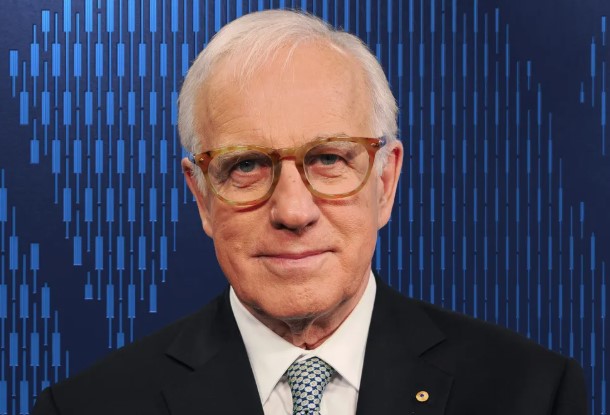
Will Bodewes, founder of Phonely.ai joins Alan Kohler to unpack it all on That’s Business with Alan Kohler.

Advertisement

Derryn Hinch has been remembered for making waves as one of Australia’s most outspoken and influential voices.

Longtime friend and colleague Darren James led mourners through a state funeral for the former broadcaster and senator on Monday.

“He was a journalist, a newspaper reporter, a TV presenter, a godfather, an author, a senator and, a prisoner … he did it all,” James told the service.

“Some people pass through life without leaving a ripple, he created tsunamis.”

Hinch died on 10 July at the age of 82 after a lengthy health struggle, much of which he documented for followers on social media.

The service for the lifelong atheist, who went to jail for identifying a paedophile Catholic priest before his trial, was held at the Timber Yard events space in Port Melbourne, near factories and apartments devoid of any religious leaning.

It attracted notable figures, including news presenters Ray Martin and Denis Walter, entertainers Rhonda Burchmore and Greg Evans, and former Crown executive Ann Peacock.

Other mourners, including Labor MP Danny Pearson, who attended on behalf of Premier Jacinta Allan, streamed in to pay their respects.

“Not all of us knew him personally, but for many it felt like we did,” Pearson said.

An Australian flag was draped over his casket, surrounded by vases of red roses symbolising deep love, respect, courage and enduring affection.

A large crowd of people sitting in rows of seats, behind a stage with a casket on it.

Hinch initially moved from New Zealand to Australia to pursue a career in journalism, climbing the ranks to become editor of The Sun before turning to a career in radio.

He became known as the “human headline” — a moniker he enthusiastically adopted — for his outspoken and often controversial opinions.

Former 3AW colleagues Denis O’Kane and Tony Tardio spoke of their love for Hinch, who was well known for his hatred of child sex offenders and those who shielded them.

“There will never be another like him, even his name was unique,” Tardio said.

“He was a journalistic James Bond, drama followed him everywhere — even to his first wedding. And then he went on to marry three other times.”

His ex-wife and friend, actor Jacki Weaver, sent a video tribute from America describing Hinch as a wonderful stepfather and companion.

She also referenced Hinch’s reputation as a notorious ladies’ man.

Pallbearers carrying a casket with an Australina flag and roses draped on top of it.

“I’d like to pay my respects to all the women who loved Derryn, and who loved him back,” she said.

“I won’t name them all … we don’t have time.”

While commanding the airwaves for decades as a talkback radio host on Melbourne radio station 3AW, Hinch became known for his uninhibited takes and a tendency to court controversy.

Later, Hinch turned to the political arena, forming Derryn Hinch’s Justice Party and serving as a senator for Victoria in the federal parliament from 2016 to 2019.

His party focused on reforms to the justice system, including better protections for children, tightening of bail and parole laws, and the establishment of a sex offenders’ register.

Hinch’s final farewell ended with a eulogy by fellow media stalwart Martin, who said his mate would have loved the idea of having a state funeral and a standing ovation.

The service was brought to a close with the music of That’s Life by Frank Sinatra, often used as the sign-off from his daily radio show.

Advertisement

Sarah Ferguson has not been seen publicly for months.

But while rumours swirl about the former duchess’s whereabouts and whether she is contemplating a tell-all interview, there are mounting calls for her to give evidence concerning her links to Jeffrey Epstein.

US lawmakers have repeatedly called for her former husband, Andrew Mountbatten-Windsor, to answer questions about his links to the late American financier and sex offender. Now Ferguson is being urged to do the same.

Congressman Suhas Subramanyam, a member of the House Oversight Committee investigating the handling of Epstein’s prosecution, said he now believed she had “information related to the investigation”.

“Sarah Ferguson should give sworn testimony to our committee,” he said.

There is no legal mechanism to compel Ferguson to testify in the US.

But Subramanyam told the BBC that lawmakers would be “happy to work out terms that work for her”, as long as she was under oath.

Ferguson’s representatives declined to comment.

Subramanyam’s calls were echoed by Democratic Congresswoman Melanie Stansbury, who urged anyone with information of wrongdoing by Epstein and his associates to cooperate in order to ensure justice for the survivors.

“If Ferguson or any member of their family has such information, our responsibility is to follow the facts wherever they lead,” she told the BBC.

The family of prominent Epstein accuser Virginia Giuffre also said they “strongly believed” the former Duchess of York should go to the US to answer questions.

“If Ferguson knows anything, she should testify in the United States immediately,” a representative for Giuffre’s brother Sky Roberts told the BBC.

AFP Sarah Ferguson, followed by Andrew Mountbatten-Windsor (formerly known as Prince Andrew, Duke of York), leaves St. George's Chapel, in Windsor Castle, after attending the Easter Mattins Service, on March 31, 2024. Ferguson is dressed in a green collar-less jacket. She has long red hair and is wearing a black headband embellished with pearls. Mountbatten-Windsor is behind her and out of focus.

Ferguson’s next move has been the subject of speculation.

​​Rumours are flying that she’s been offered six-figure sums from US networks for an interview.

But “it is hard to tell whether they would now believe she is too tainted,” said Max Goldbart, international TV editor at Deadline.

​​It comes after new details emerged about the former Duchess of York’s friendship with the late convicted sex offender in the millions of documents released by the US Department of Justice earlier this year.

Ferguson is seen praising the late sex offender in 2009 as “the brother I have always wished for”.

A ‘material witness’

The emails also suggest she contacted Epstein while he was in prison for soliciting prostitution from a minor – and that she took her daughters along for lunch with him in Miami, days after his release from prison.

Gloria Allred, a prominent lawyer representing some of Epstein’s victims, said the new revelations make it clear she is “not a victim in this story”.

“While many individuals who are named in the Epstein files are able to claim that they had no knowledge of Epstein’s crimes against children when they associated with him, that is not a defence that Sarah Ferguson is able to assert,” she said.

She added it was “long overdue” for Ferguson to volunteer to testify under oath to Congress, and also urged her to speak to police in the UK to answer their questions.

Andrew Lownie, author of the biography Entitled: The Rise and Fall of the House of York, also said she should give evidence in the US, calling Ferguson a “material witness”.

“She visited his homes regularly,” Lownie told the BBC.

“She will have seen just as much as Andrew. It’s inconceivable that she didn’t. She was so matey with Epstein.”

But Jonathan Coad, a media lawyer who has represented Ferguson in defamation and privacy cases in the past, said there was “no chance” she would go to the US.

“Of course she won’t, and if she were still my client, my very strong advice to her would be not to go,” he said.

“It would be a disaster for her, for her daughters Beatrice and Eugenie – and also for Andrew, as it would show him up for not going.”

Dave Benett/Getty Images Princess Beatrice of York, Sarah Ferguson, then Duchess of York and Princess Eugenie of York all dressed in black at a launch event

Until now, Ferguson – invariably known as Fergie – has been a great survivor in royal circles and has bounced back repeatedly from misfortunes.

But she has been plagued by her own Epstein controversies – which led to her being dropped by multiple charities last September.

The Youth Impact Council, an LA-based non-profit organisation that supports young leaders, has also confirmed to the BBC that she stepped back from her role as ambassador at the same time.

‘She knows where all the bodies are buried’

In October, she lost her duchess title when her ex-husband relinquished his Duke of York title over his links with Epstein, and she was also forced to move out of his Windsor mansion, Royal Lodge, where the couple lived together, despite having divorced in 1996.

The former duchess could also have her freedom of the City of York stripped next week, in a further fall from grace.

City of York councillors are meeting on 26 March to discuss a proposal to remove the honour.

Ferguson’s whereabouts are currently unknown, with media reports variously placing her in the United Arab Emirates, Portugal, Switzerland, and at a wellness retreat in Ireland.

But somewhat surprisingly, she has managed to evade being photographed anywhere.

There has also been speculation in the press she has been considering a tell-all memoir

“She knows where all the bodies are buried,” said royal commentator Richard Palmer.

“She certainly must have information that would potentially be embarrassing to the royal household.”

Getty Images Sarah Ferguson, then Duchess of York, attends The Son red carpet at the 79th Venice International Film Festival on September 07, 2022 in Venice, Italy. She is smiling and is wearing a green long-sleeved dress. She has long red hair. Photographers can be seen in the background.

Harper Collins, who have published two titles with Ferguson, declined to comment when asked by the BBC whether they have had any discussions with her about a memoir.

As for the rumours of a tell-all TV interview, Goldbart from Deadline says it might be “somewhat jarring,” but added it would “undoubtedly make for good TV”.

​​”American audiences are fascinated by Royal Family psychodrama, especially where Andrew Mountbatten-Windsor is currently concerned.”

When asked about a memoir or a tell-all interview, Ferguson’s representative did not respond.

Last month, Ferguson’s charity, Sarah’s Trust, announced it would close “for the foreseeable future”.

Advertisement

Australia’s world-leading social media ban for under 16s “won’t work”, crossbencher Jacqui Lambie says as the Albanese government releases the results of a landmark trial it says states otherwise.

The final report of the Age Assurance Technology Trial found verifying ages “can be done in Australia privately, efficiently and effectively”, and that a “wide range of approaches exist”.

Though, it also found “there is no one-size-fits-all solution”, meaning platforms would likely need to use a combination of tools to enforce age restrictions and avoid getting fined up to $49.5m.

Senator Lambie, who did not vote for the ban, said it would not work because “governments of today … don’t have the courage to take on the social media networks themselves”.

“This will not work,” the independent senator told Sky News.

“And as a mother, I would hate to think that I’m giving those social media companies more information about my own children.

“That is disgraceful.”

Independent senator Jacqui Lambie says the social media ban ‘won’t work’. Picture: NewsWire / Martin Ollman


The Age Check Certification Scheme, which carried out the AATT, made it clear the report was “not a set of policy recommendations or endorsements for certain types of age assurance technology”.

But it did point to age verification, such as using official documents, as a “high-assurance method”.

There has been hesitancy to this approach, with some fearing data breaches could leak users’ sensitive information.

“There needs to be a lot more control over those social media companies, and … we need to put rules and regulations on them, and (the government is) not doing that,” Senator Lambie said.

“It shouldn’t be up to mum and dad because governments have failed to do the job.”

But the Albanese government takes a different view, with Communications Minister Anika Wells saying it “is on the side of families and we’re pushing forward with our mission to keep kids safer online through world-leading reforms”.

Communications Minister Amanda Rishworth says there is ‘no one-size-fits-all solution’ to age assurance. Picture: NewsWire / Martin Ollman

“This report is the latest piece of evidence showing digital platforms have access to technology to better protect young people from inappropriate content and harm,” she said in a statement.

“While there’s no one-size-fits-all solution to age assurance, this trial shows there are many effective options and importantly that user privacy can be safeguarded.”

The final Age Assurance Technology Trial report finds it is possible to enforce the Albanese government’s social media ban for under 16s. Picture: NewsWire / Aaron Francis

Other approaches identified include age estimation using artificial intelligence and machine learning to firm up a person’s likely age or age range, and age inference, which looks at a user’s broader behaviour.

Age inference finds “a fact”, such as voter enrolment, links it to a user and then makes a judgement on whether that user is over 18.

In line with the report’s finding and Ms Wells’ remarks, it is likely social media platforms will need to use multiple approaches.

The AATT’s lead earlier this year flagged successive validation as a possible fit.

Successive validation is a series of escalating tests that become more rigorous if a prior method is inconclusive.


Advertisement

A married couple, having lived together for several years, decided to escape their daily routine for a while. Their destination was Northern France, drawn by the rugged beauty of the coastline and the opportunity to take a flight over the famous point where the English Channel meets the North Sea. This trip promised them both relaxation and a touch of adventure.

On the morning of their departure, the sky was clear—crossed only faintly by clouds—and a gentle breeze drifted across the airfield. As they approached the small aircraft awaiting them, they paused for a moment to admire its elegant appearance. It looked almost brand-new, gleaming in the sunlight, with harmonious lines and a perfectly maintained cabin. No sooner had they stepped aboard than they were seized by an almost childlike excitement—as if they had entered another world.

Before takeoff, they took their time inspecting the aircraft. They examined the seats, touched the controls in the cockpit, and looked over the various instruments. Then, they checked the storage compartments and onboard equipment. The air inside the cabin was slightly cool, carrying the distinct scent of metal and fuel. They exchanged smiles, imagining the day ahead—one to be spent in the skies, far removed from the noise and obligations of everyday life.

In a corner of the cockpit, they finally noticed an old navigation device. It looked quite dated, with worn buttons and a slightly scratched screen. Out of curiosity, they decided to switch it on—and, to their surprise, it still worked. Gradually, a map appeared on the screen. Immediately, one detail caught their eye: an isolated point, devoid of any labels or explanations.

They exchanged amused glances. This mysterious spot instantly piqued their curiosity. A glitch? A trace left behind by a previous pilot? Or perhaps something even more intriguing? After a brief moment of deliberation, they decided to simply follow the clue. The weather was calm, they had plenty of time—and they liked the idea.

The aircraft lifted smoothly from the runway and climbed high above the coastline. The sea stretched out beneath them like a vast, shimmering expanse. Every now and then, cargo ships or ferries would flit past in the distance. They reveled in the flight, gazing out at the horizon and admiring the scenery. They chatted and laughed, or sometimes simply fell silent, mesmerized by the view from the sky. The atmosphere was peaceful and pleasant.

After some time, they approached the point marked on their map. The light began to shift subtly, and the colors of the sea grew increasingly vivid. Glancing down, they suddenly noticed something strange: standing on a small, isolated patch of land was an old stone house.

They descended slightly to get a better look at the structure. It appeared abandoned—weathered by wind and salt—with absolutely no signs of life around it. Then they realized that the mysterious point likely referred to this forgotten spot—perhaps an old fisherman’s hut, an old lookout post, or a long-deserted home.

In the end, the situation made them laugh. It wasn’t the grand mystery they had anticipated, but it possessed a charm of its own. They shared a few jokes about their impromptu “treasure hunt” and continued their flight, having disturbed no one.

Finally, they resumed their journey, allowing the little house to slowly recede behind them. Their voyage continued—even more tranquil than before—with the certainty that this unexpected discovery would remain one of the most memorable moments of their trip.

Advertisement

A married couple who had been married for several years decided to escape their daily routine for a while. They chose northern France, drawn by the rugged beauty of the coast and the opportunity to sail through the famous strait connecting the English Channel with the North Sea. This voyage promised both relaxation and a touch of adventure.

On the morning of their departure, the sky was clear, with only a few clouds, and a gentle breeze blew over the harbor. Approaching the yacht, they paused for a moment, admiring its elegant appearance. It looked almost new, sparkling in the sun and impressing with its harmonious lines and impeccable deck. As soon as they stepped aboard, they felt an almost childlike sense of anticipation—as if they were entering another world.

Before departure, they leisurely inspected the ship. Slowly strolling along the deck, they touched the warm wood, examining the ropes, sails, and instruments. Then they went down to the cabin. The air was cooler there, with a slight hint of salt and old wood. They opened the cabinets, peered into the cabins, and smiled, imagining a day alone at sea—away from the noise and responsibilities.

In a dimly lit corner, they finally discovered an old navigation device. It looked very old, with worn buttons and a scratched display. Out of curiosity, they turned it on—and to their surprise, it still worked. Gradually, a map appeared, on which they immediately noticed one detail: a lonely dot in the middle of the channel, without any explanation.

They exchanged quizzical glances. This mysterious place immediately piqued their curiosity. Was it a mistake? A relic of the past? Or perhaps something more exciting? After some thought, they decided to simply follow the clue. The weather was calm, they had time—and they liked the idea.

The yacht smoothly exited the harbor and sailed out into the open sea. The sea was calm; only occasionally did they see cargo ships or ferries passing in the distance. They enjoyed the journey, admiring the horizon and breathing in the salty air. They chatted, laughed, and sometimes simply sat in silence, listening to the sound of the waves. The whole atmosphere was pleasantly calming.

Time passed, they approached the marked point. The light changed, and the sea took on more saturated colors. Suddenly, the yacht abruptly slowed and stopped. They felt a slight jolt—they had run aground on a sandbank.

Surprised but calm, they looked around. Nearby, they discovered a small, old stone building. It looked abandoned, weathered by wind and salt, without any signs of life. Then they realized that the mysterious cape probably led directly here—to a forgotten place, perhaps once a fishing hut or lookout post.

In the end, the situation made them laugh. It wasn’t the big secret they’d expected, but it had its charm. They joked about their impromptu “treasure hunt” and then calmly pondered how to escape. While waiting for the tide, they checked the sails, the depth, and maneuvered carefully.

Finally, the yacht slowly lifted off the sand and glided smoothly back into deeper water. Relieved and still filled with a sense of exhilaration, they left the old building behind. Their journey continued—more peacefully than before, and confident that this unexpected adventure would become one of the most pleasant memories of their trip.

Advertisement

Alpine Stoat Pty Ltd

25 Thomas Ave, Roseville NSW 2069, Australia

+61450743448

[email protected]

Disclaimer

The content published on this blog is provided for general informational purposes only. While we strive to keep the information accurate and up to date, we make no representations regarding its accuracy, completeness, or reliability. Any reliance on the information available on this website is at your own discretion.

All rights reserved. 2026